
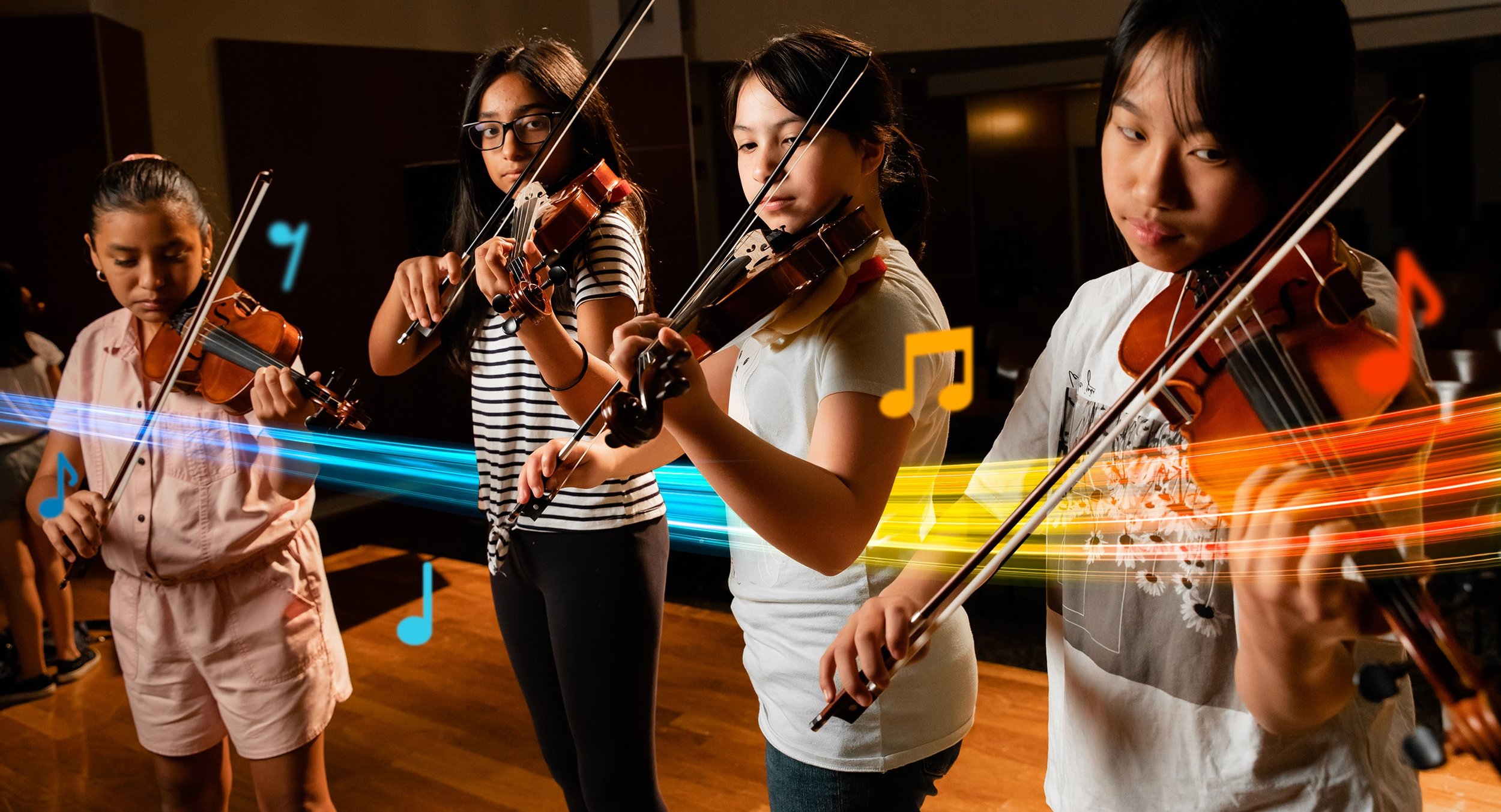
A key component of Law Rocks’ mission is to promote youth music education. In 2023, the Law Rocks Board founded the Music Matters grant, given to a local nonprofit that supports youth music education in each of our US tour cities. Omi Crawford, Executive Director of Law Rocks, says of the grant initiative:
“Law Rocks has always been about championing nonprofits, especially local organizations that make a real difference in their community. The Music Matters grant deepens that commitment, helping support music education organizations nationwide as they change young lives through the power of music. It’s inspiring and exciting to learn more about each organizations work, truly one of the best things about this work!”
We are pleased to be awarding a Music Matters grant to Merit School of Music at The Fifth Annual Law Rocks Chicago on Thursday, May 14, 2026. Merit transforms the lives of Chicago-area youth through removing barriers to high-quality music education. Learn about the organization and its dedication to serving students in our Nonprofit Spotlight interview with Meredith Barber, Vice President of Development and Marketing for Merit School of Music.
Law Rocks Chicago 2026 Music Matters Grant Recipient: Merit School of Music | Photos by Kyle Flubacker | Courtesy of Merit School of Music
1) Can you tell us a little about the history of your nonprofit, as well as its mission and focus?
Absolutely! Driven by the belief that “talent is equally distributed; opportunity is not,” Merit School of Music has been part of Chicago’s cultural fabric for more than 45 years. From the beginning, our mission has been simple but powerful: to remove barriers to high-quality music education so that young people across Chicagoland can experience the life-changing power of music.
Today, Merit is a nationally accredited music school serving more than 3,000 students each year—from babies discovering sound for the first time to high school musicians preparing for college. Our students reflect the incredible racial, cultural, and socioeconomic diversity of Chicago, and that diversity is one of our greatest strengths.
We’re guided by values that shape everything we do: a commitment to excellence, a welcoming and generous learning community, collaboration rooted in empathy and accountability, and a deep belief that everyone belongs.
At Merit, students don’t just learn music. They learn how to persist, collaborate, and imagine bigger futures for themselves.
2) What is the best example of the way you’ve seen your organization’s work make a difference?
One of the most powerful examples comes from a relatively new Merit Music in Communities (MMIC) partnership in Crete, Illinois. MMiC provides high-quality music education at 25 schools and community centers throughout Chicagoland, with a focus on programs in under resourced neighborhoods.
Crete-Monee High School already had a strong band program, but like so many schools, there simply wasn’t funding for individual instruction outside of class. Without this individual instruction, students often hit ceilings in their learning which they can’t break through on their own. When Merit began providing subsidized private lessons to supplement the band program, the change was immediate—and honestly, pretty remarkable.
After just one year, 18 students progressed enough to be accepted into Merit’s Alice S. Pfaelzer Conservatory, Chicago’s premier (and tuition-free!) conservatory for pre-collegiate musicians. Over the past two years, that’s 31 students from Crete-Monee who suddenly had access to advanced training and a whole new set of possibilities.
And the story didn’t stop there. The partnership expanded to include violin and cello instruction at all five elementary schools in the district. The year wrapped up with concerts at each school and a combined performance at the high school where it all began—a full-circle moment that really captured the impact access can have on a community.
On a more individual level, there’s Ardash, a young cellist who loved music but felt stuck musical growth. Watching other students play more advanced repertoire, he started asking, “Why not me?” After hitting a plateau, he even considered quitting. Encouraged by his mom, Ardash decided to seek out the advanced opportunities he knew were available at Merit. After intensive preparation, he auditioned for the Conservatory—and was accepted!
“It was so motivational,” he shared. “I did the most practice I’ve ever done in my life.”
Stories like these remind us that plateaus are part of learning—whether in music or in life. What Merit provides is the support, challenge, and encouragement students need to push through them. And that’s why 100% of Conservatory graduates go on to college, many pursuing music, STEM fields, or becoming the first in their families to earn a degree.
3) What are some upcoming initiatives that you are planning for?
One of the things that makes Merit so special is the opportunity for collaboration between our students and world-class professional music organizations. These partnerships inspire our students to think beyond what is in front of them and connect them to what’s possible beyond the classroom. Just this year, these partnerships include Lyric Opera ofChicago, Chicago Symphony Orchestra, Music of the Baroque, Apollo’s Fire, Ballet Chicago, and Oberlin Conservatory, and so many more.
Another important area of growth is our specialized instruction for deaf and hard-of-hearing students, which is currently offered at six sites throughout the MMIC program in collaboration with the Foundation for Hearing and Speech Resources. Continuing to grow this work helps ensure more students can fully access music education in ways that meet their needs and bring them joy.
And we’re especially looking forward to Stringtacular this spring, a performance celebration that brings together 250+ students from Merit’s Comunidad de Alegre Program. This is a specialized string curriculum which incorporates Latin American and other cross-cultural repertoire into the Suzuki method. Students from different programs and neighborhoods to come together in this program to experience the joy of making music side by side and celebrate the shared experience of performing.
4) What is the greatest challenge your organization faces?
Like many nonprofits, we’re thinking about long-term sustainability broadly, navigating a nationwide shift in philanthropy and asking important questions about how to engage the next generation of supporters—people who are deeply committed to community, but who may have different expectations around time, involvement, and giving than previous generations.
We’re also operating in a moment of significant political and social unrest, which impacts our students and families in very real ways. Chicago is often a flashpoint for enforcement operations and public policy changes, and that uncertainty can weigh heavily on young people trying to learn, grow, and find stability.
All of this reinforces why our work matters. The need for safe, supportive, creative spaces where young people can build confidence, connection, and resilience has never been greater—and meeting that need requires both resources and long-term commitment.
5) What does the power of music mean to you?
To us, the power of music starts with connection. Making music brings people together—especially when it happens in a shared space like a group class, ensemble, or orchestra. When students make music side by side, they’re introduced to new experiences, perspectives, and ways of seeing the world.
At a music school like Merit, where students come from every background and corner of Chicagoland, music becomes a bridge. It connects cultures, builds empathy, and creates a sense of belonging. Research also shows that students who study music are more engaged in their school communities and develop stronger relationship-building and teamwork skills, and we see that play out every day.
Music also has a powerful impact on success in school and in life. Students who study music tend to perform better academically, graduate at higher rates, and develop qualities like confidence, independence, perseverance, leadership, and personal responsibility. Music education also strengthens spatial-temporal and problem-solving skills, which is one reason so many students go on to thrive in STEM fields.
And finally, music supports the whole person—mind and body. Learning and playing an instrument strengthens the brain, improves focus, and supports healthy development from early childhood through adulthood. Music nurtures creativity, helps people express and remember who they are, and can be a powerful tool for managing stress and emotion.
At its best, music doesn’t just teach notes and rhythms—it helps young people grow into confident, curious, and connected humans.
5) How will the Music Matters grant be used?
$2,000 supports classes in our Conservatory program, providing highly specialized training among Chicagoland’s most promising youth musicians. For 26 Saturdays during the school year, students receive classical and/or jazz instruction from Chicago’s finest teaching artists in areas such as technique, music theory, chamber music, large ensembles, and more. Conservatory programs are available tuition-free by a process of audition.
—
Learn more about Merit School of Music.
Read the recap for The Fifth Annual Law Rocks Chicago.
Header photo by Kyle Flubacker | Courtesy of Merit School of Music